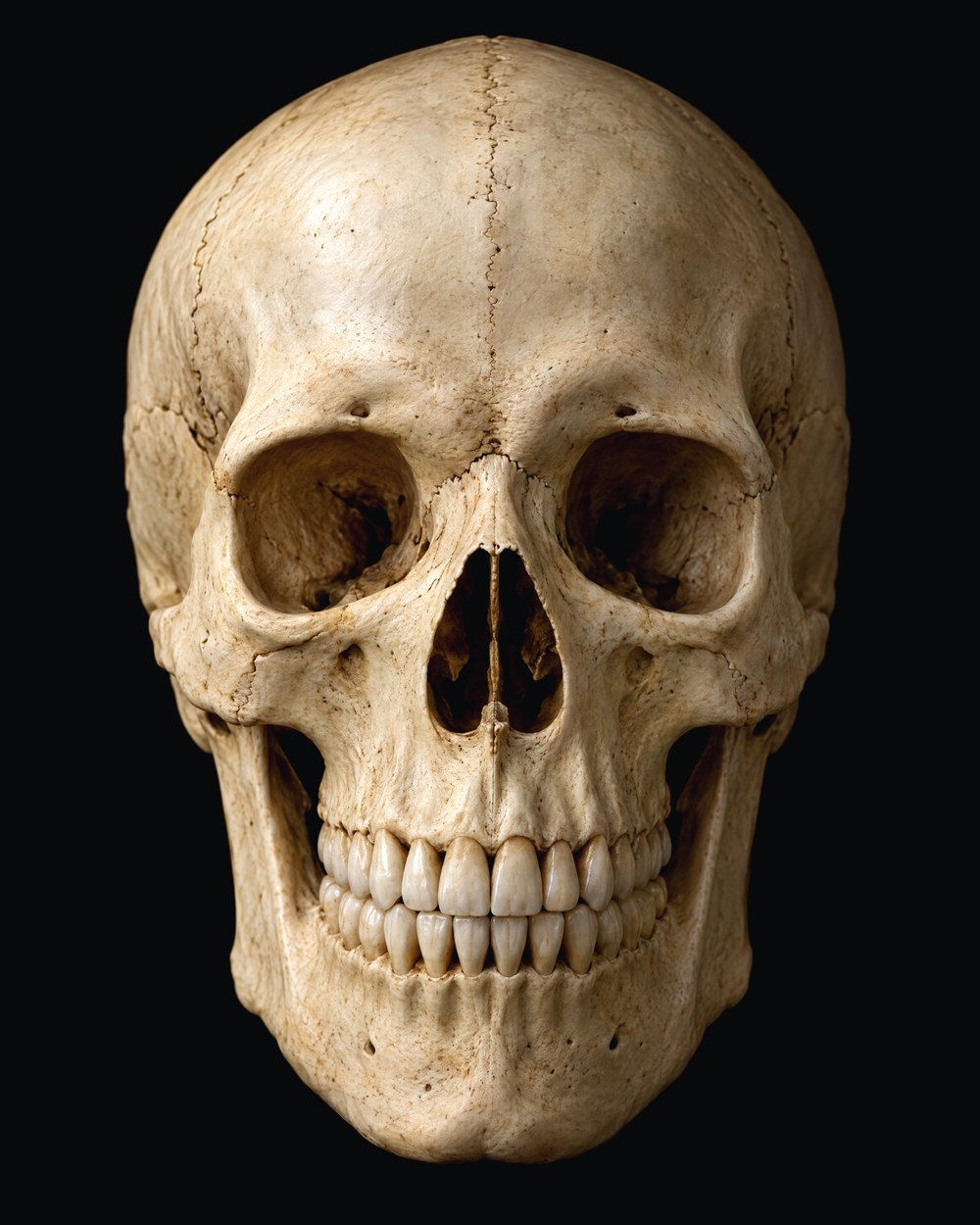
The mandible is your lower jaw. It is the only bone in the face that moves. It has the shape of a horseshoe, and it joins the skull at both ends. So it works like a ring. When a ring breaks in one place, it often breaks in a second place too. This is why surgeons always check the whole jaw.
How it happens
The usual causes are falls, sport, assaults, and road accidents. The common signs are:
- Pain when you bite.
- A bite that suddenly feels wrong.
- A numb feeling in the lower lip.
- A gap or a step between the teeth.
- Difficulty when you open your mouth.
How surgeons treat it
- A small, stable fracture can heal with a soft diet and close checks. It may not need surgery.
- A fracture where the bone has moved usually needs small titaniumA strong, light metal. Surgeons use it for the plates and screws that hold bone. plates and screws. The surgeon reaches it from inside the mouth, so there is no scar on the face.
- The bite is the guide. The goal is to make your teeth meet again as they did before.
Most people eat soft food for a few weeks while the bone heals.
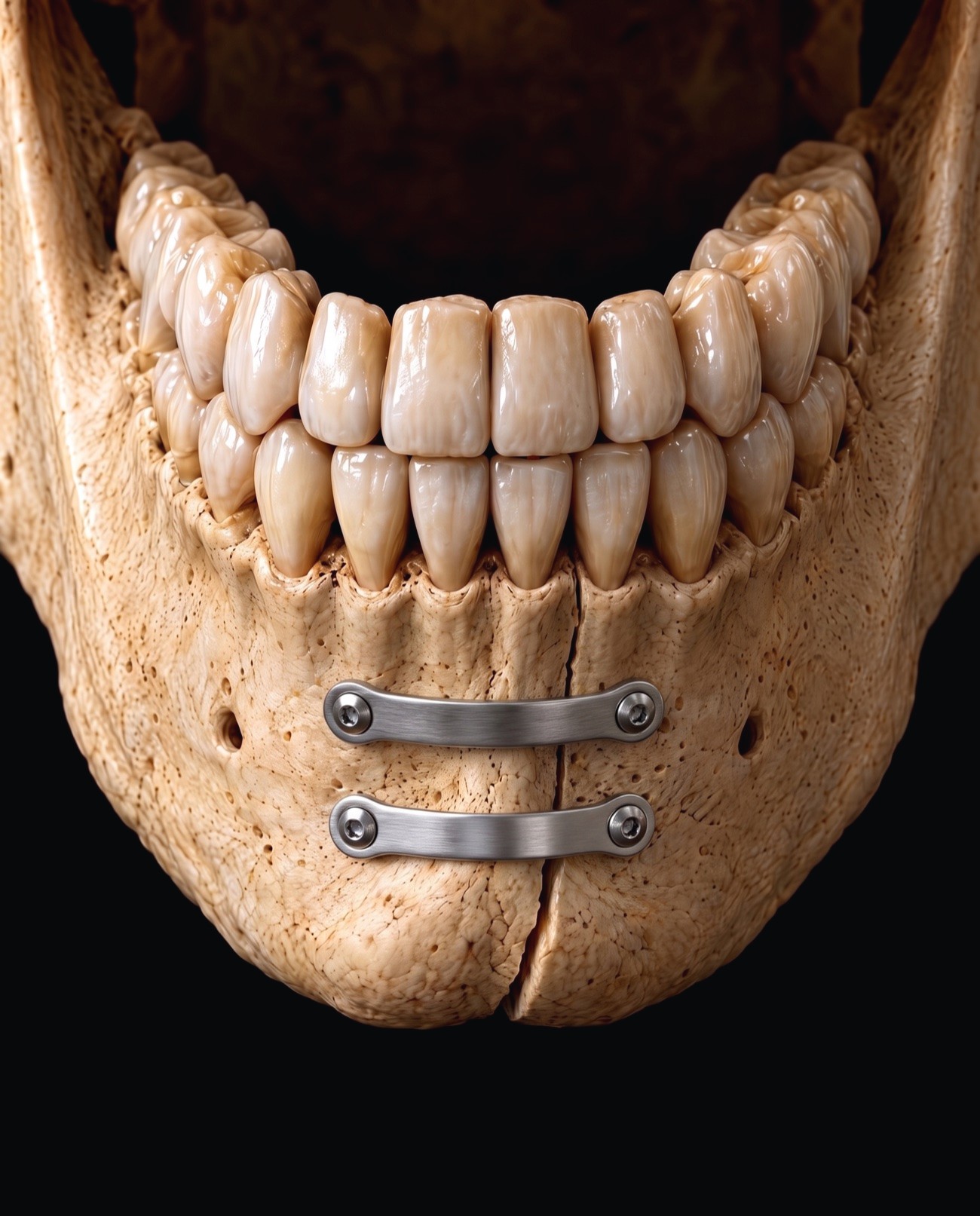
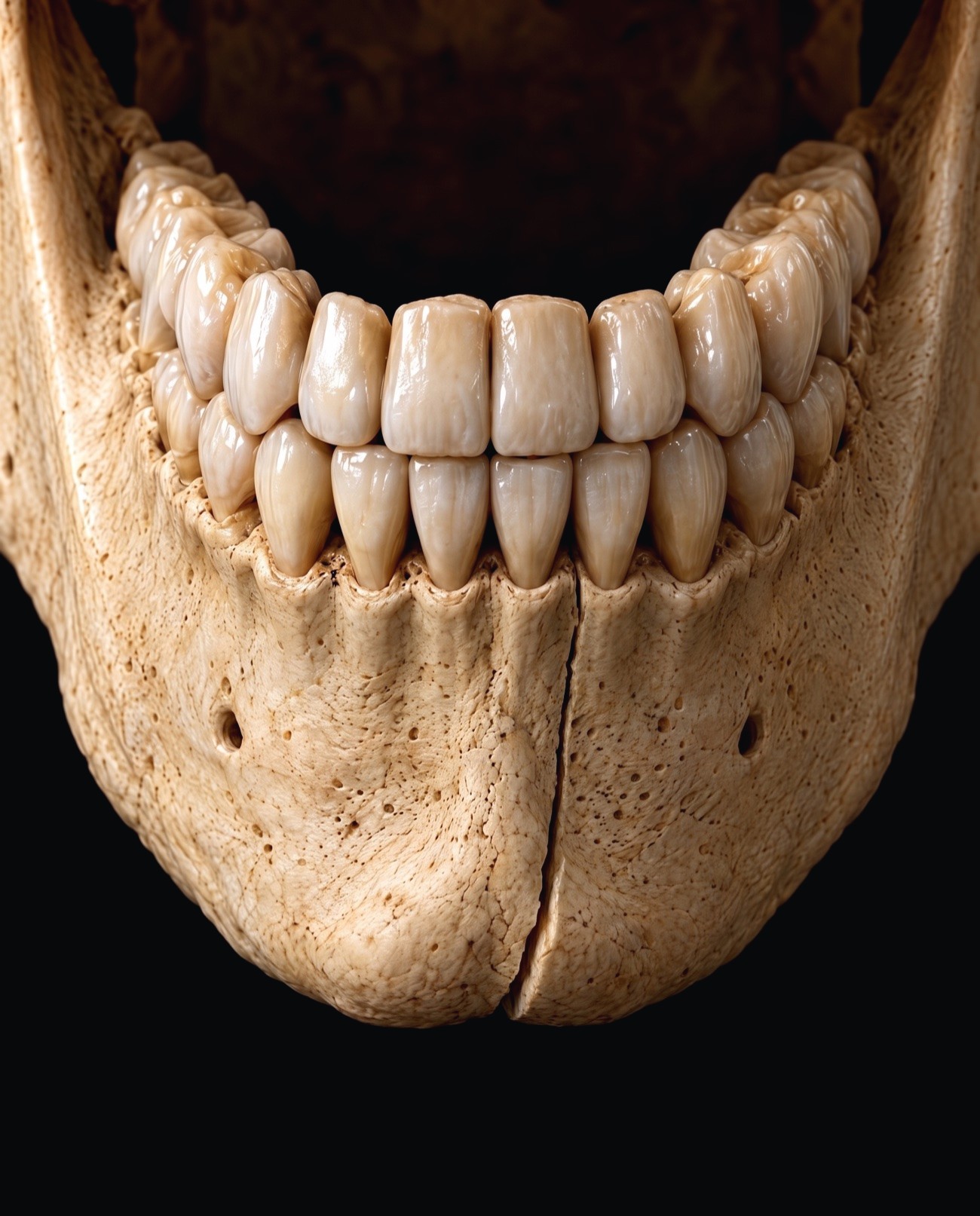 FracturedRepaired with plate